Stories

War settles nothing...
Dwight D. Eisenhower
video's of interest
‘’Dennis Egan: The man who got things done’’
In this article I honour this remarkable man. It is an...
| Some time ago I had contact with this remarkable person and asked him to tell me more about his landing on Omaha beach, Ju...
|
my guestbook
all tributes
the people
become member!
Dennis Egan: The man who got things done ‘’Dennis Egan: The man who got things done’’
In this article I honour this remarkable man. It is an honour to have met him and listened to his stories with "red ears".
Thanks to NAIL for this interview
Fred Vogels
In the last NAIL Newsletter, we promiseda special article on Dennis Egan, an American and longtime NAIL member who played a very unique role during the liberation of the Netherlands sixty years ago. He has been honored by both the U.S. and Dutch government, as well as the French government, and in 1982 received the Verzets herkenkingkruis for his work helping the dutch resistance. Just recently, he was back in Washington DC as a special guest of the CIA and OSS to mark the 60th anniversary of the liberation of Europe and to attend the dedication of the U.S. World War II memorial.
Who was Dennis Egan and what did he do that was so special? I asked him this in an interview that we conducted by phone recently. For the answer, I encourage you to read on and judge for yourself.
Dennis Egan joined the U.S. Army in June 1943. He was twenty years old, one of five boys that his mother and father had raised in the state of Louisiana. Two older brothers had already been sent to fight in the Far East. Dennis’s decision to join up was a natural decision in a community that was living the war daily because of the number of young men who were already fighting overseas. Dennis’s mother and father supported his decision, relieved that at least he wouldn’t be a paratrooper – something he had told them he was going to do after drinking a bottle of wine one day.
Dennis was sent to Camp Abbot, Oregon for his basic training. He was headed for the Far East when he came down with pneumonia. That illness would end up changing his life since, once he was well again, he was sent not to the Far East but rather put on a ship for England.
Dennis recalls his two weeks on the ship as a time of dealing with regular U boat alarms. One of the convoy boars was even attacked. But Dennis’ strongest recollection of his time on the ship is that he was one of the few people on board who was not seasick. Although he lived on only one meal a day for the first two days on the ship, by day 3 he was able to get as much food as he wanted because everyone else was sick. But not Dennis. His ‘’luck’’ and perhaps more importantly his ‘’can-do’’ attitude was already becoming appararent.
When he arrived in Liverpool in March 1944, he was told to report immediately to the OSS (Office of Strategic Services- the precursor to the CIA) Headquarters in London. OSS? Up until this moment , Dennis had thought he was part of the U.S army. But because of his French language capabilities (Cajun French to be exact) and his evident high IQ, he was pulled out of his ranks and told to get busy. He received no training from the OSS. Rather he was told, as his first assignment, to support French agents who were about to be dropped behind enemy lines. He was to give them everything they needed – food, cigarettes, gear. Dennis went to work, and despite his lack of experience and training, and despite operating in a new environment , he quickly demonstrated that he was indeed the right man for the job. Training wasn’t necessary; Dennis was smart on his feet.
In another decision that would change his life, Dennis was assigned to the Dutch desk in London which was organizing a field unit to move into the Netherlands as soon as possible. The mission was for the team to be in the Netherlands on the day of the liberation. Included in the Dutch team were three of the Dutch secret intelligence office as well as an officer of the British M16. Each member was issued a ‘’Blue Pass,’’ signed by General Eisenhower, permitting the bearer to proceed anywhere in the War Zone without specific orders or to requisition supplies when needed. Dennis’s first action upon joining the team: to buy a ‘’Teach Yourself Dutch’’ book.
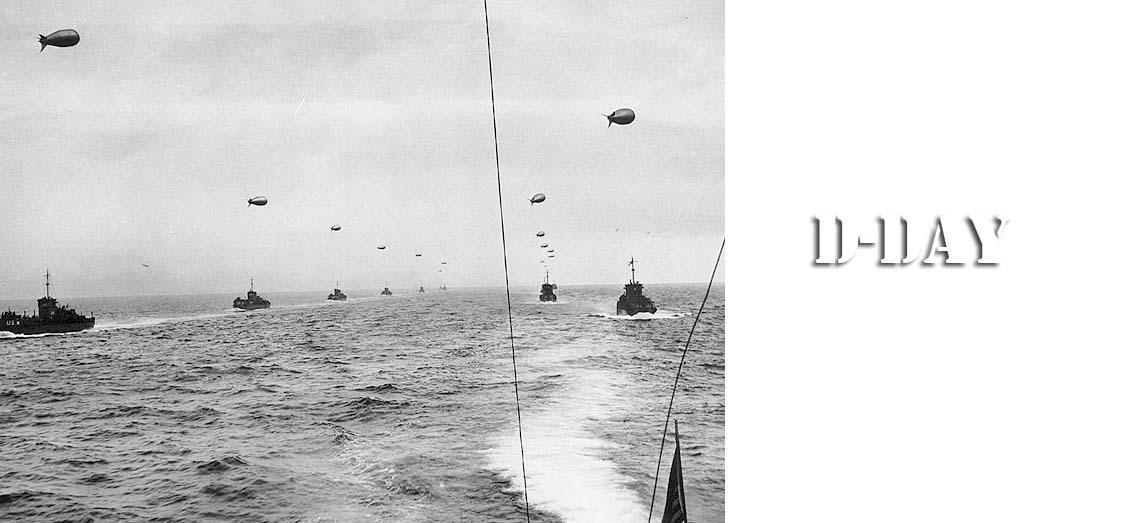
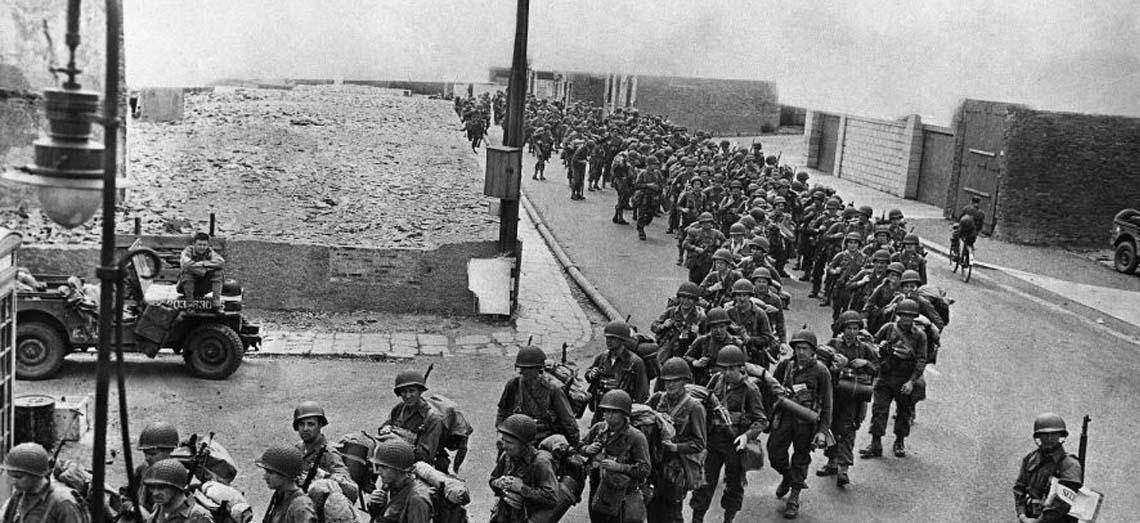
Dennis arrived in Normandy with the rest of the invasion force. Under attack by the German Air Force and warned that if he retreated to the boat he would be shot by U.S. forces, Dennis struggled to the beach along with thousands of other young men. While he surved, his all-important vehicle disappeared in a bomb crater. Again demonstrating the ‘’can-do’’ street savvy that him his assignment, Dennis managed to get a truck to pull his car out, all the while that hell was breaking out around him. The next day, he found the rest of his team who were very relieved to find him, since he had all the supplies!
Dennis and his team made their way through France and found themselves in Brussels on the day of liberation. From here, they were assigned to Operation Market Garden with British forces and a short time later, Dennis found himself for the first time in the city of Eindhoven where he would spend his next eight months. His very first day there was filled with the sort of quick-paced activity that would mark OSS Operations during this period: The people in Nijmegen needed new radio equipment; Dennis was the one sent to get it to them. Maneuvering around German forces in the area, going through scenes of pitched battles, Dennis made his way to Nijmegen and back. The next day was a new urgent assignment. And so it went on. Dennis remarks that he was lucky that he wasn’t killed himself,. But sometimes ‘’lucky’’ people are those who make their own luck.
In Eindhoven, the OSS took over a beautiful house in the center, next to the hospital. The Gestapo had been the previous occupant. There were 3 Officers Dennis plus one other enlisted person. The team quickly began feeding information supplied by the Dutch Officers to the OSS at SHAEF Headquarters, first by direct telephone contacts and later augmented by radio dispatches and agents crossing the river lines. By October 1944, the volume of information had increased to the point that the radio operation was expanded to be headed by the officers and four operators who coded, transmitted, and decoded on a 24-hour basis. At the end of the war, the Dutch Intelligence was assessed by U.S. officials as ‘’the most expert, reliable, and dense coverage of a specific enemy-occupied area than any other intelligence service’’.
It was during this period, that Dennis really distinguished himself as a man who could get things done. Dennis recalls that the British forces were that fond of Americans but that the British Commanding Officer in Eindhoven took a strong liking to Dennis and give the order ‘’Anything he wants, give it to him’’. Dennis also got along very with the Canadians. As a result, the OSS office had as much food as they needed, courtesy of the British forces, and as much gas as they needed, courtesy of the Canadians.
I asked Dennis why he was so popular. He said that he personally had a lot of respect for the Britisch forces which had to operate with much less than their American counterparts. Dennis was also easy to work with. For example, early on, the British Commander saw a number of wrecked U.S. gliders and asked if the British could use the wreckage for their vehicles. Dennis didn’t go back up the chain of command looking for an answer. He simply said yes. Later the Colonel Van Der Gracht, of the OSS office, was desperately looking for a jeep which wasn’t available. Never one to give up,, Dennis got the Canadian back loading unit to put a jeep together from parts. When Prince Bernhard insisted that he came back into the Netherlands in a jeep, Dennis got the Canadians to do the same thing again since there were still no jeeps available. For those of you familiar with the U.S. show ‘’MASH,’’ Dennis seemed to have the special skills exhibited in that show by Radar.
Thus, as the war was coming to a close, Dennis was in a good position: well-liked, well-connected, and clearly successful. The next step for the OSS was to move into a huge villa in Wassenaar. They would stay there until after Hiroshima,, when, basically, ‘’everybody left,’’ according to Dennis. There was no reason to stay and the U.S. military made it its policy not to discharge in Europe, so everyone emptied out – except Dennis and one Officer.
At that point, the U.S. military attaché at the embassy in the Hague asked the remaining OSS Officers to recommend the ‘’best man we could have.’’ Not surprisingly , Dennis was recommended for the position at the U.S. Embassy. He was then given a letter to take to Paris to request a discharge there. On January 8, 1946, Dennis was formally discharged with the rank of Sergeant at the Seine Section of the U.S Army. As a result, Dennis was able to stay in the Netherlands. He married and, after he left the U.S. Embassy, established himself as an insurance salesman and real estate agent in the Wassenaar area.
Today Dennis continues to live in Wassenaar and considers it a great privilege to be able to live among the Dutch people. He had four children through his first marriage, all of whom were educated in the Netherlands, married ‘’Dutch,’’ and continues to live here. Dennis has been married to Toos for more than 25 years. Dennis would go back to the U.S. every few years but always returned, his great love for the Dutch people pulling him back.
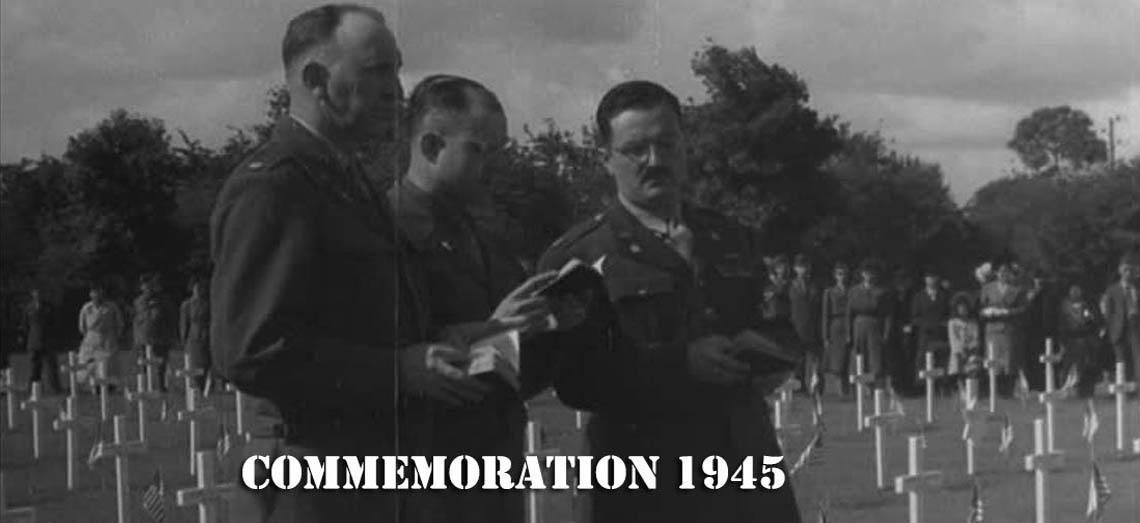
Dennis and Toos became NAIL members many years ago when he saw that NAIL remained very active when all of the other U.S-Dutch Friendship groups faded away. He is very proud to be a member of NAIL and, although he is not able to come to many NAIL functions, he sends his good wishes and respect to all of the NAIL members. One final note: Dennis was the Master of Ceremonies at the official dedication of the Margraten Memorial Cemetery following the end of WWII. His special connection with Margraten continues to this day. |
Michael Accordino, the first soldier Omaha Beach June 6 1944
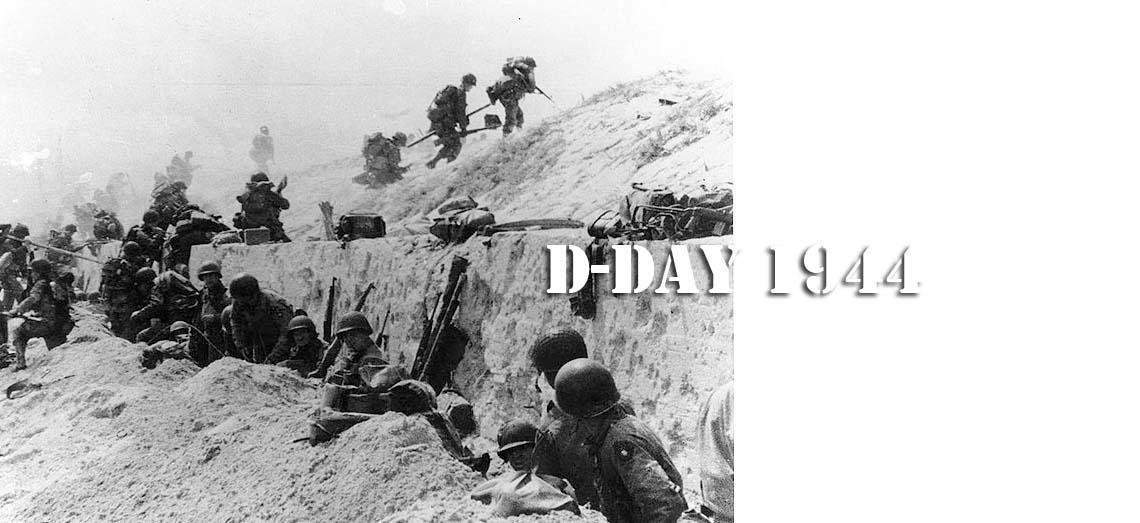
Some time ago I had contact with this remarkable person and asked him to tell me more about his landing on Omaha beach, June 6th 1944
Here is his story:
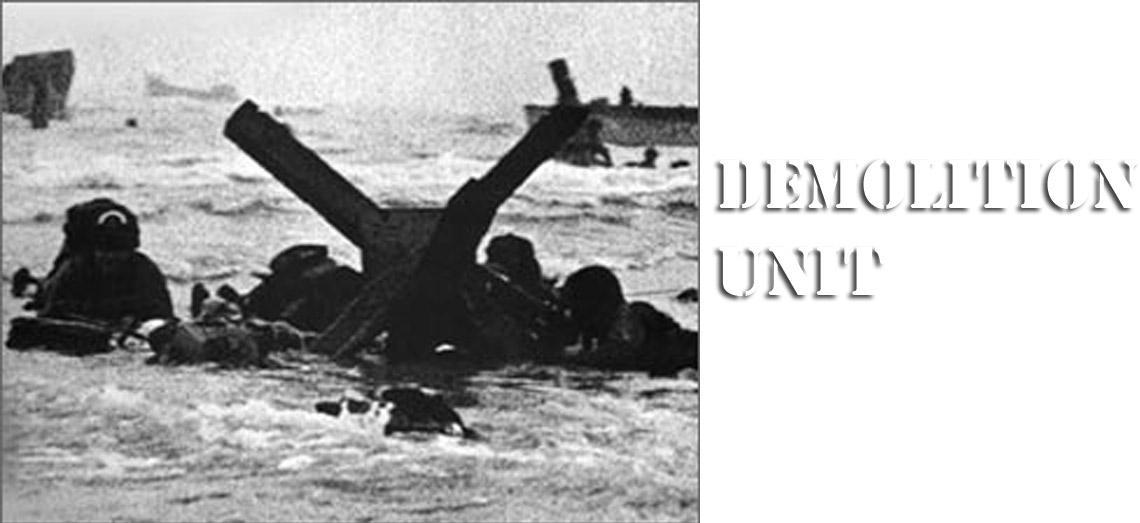
I went across the English Channel on an LCT ( Landing Craft tank ) that towed an LCM, ( Landing Craft Mechanized ).On the LCT was our demolition team assault team #12. There also was three or four tanks aboard and their crews.It was a rough crossing but I suffered no sea sickness.The LCM was carrying our supplies,demolition,prima cord,fuses,etc. The LCM also carried a seven man rubber boat with all the supplies in the rubber boat. Now this was a problem for us. We never trained for this situation. Which was for us to drag this rubber boat off the LCM with all the supplies in it. The thing must have weighed 700 pounds. hen we arrived to an area 2,000 plus yards away from the Omaha Beach, the LCM came along side and we jumped into it from the LCT. I must add here that our outfit,the 299th Engineer (c) Battalion, was he only US Army Unit that landed on both American Beaches,Omaha and Utah. A and C company landed on Omaha Beach,B Company on Utah. I was in A Company. You probably noted that Gene Shales was in B Company and landed on Utah Beach. The LCM circled about until the other assault boats from our outfit joined us and then we headed for Omaha Beach. There were eight, numbered ( 9 to 16 ) and four lettered assault boats ( E to H ). Our destination was the sector named "Easy Red". It turned out to be red but it wasn't easy. On the way to the Beach soldiers were standing on a tank and waving and yelling frantically. The helmsman steered the LCM to them and asked them what the problem was. They were sinking. The helmsman said he couldn't help them and he continued to the beach. He should not have done that. His job was to get us to the beach. There were rescue people out there to take care of that matter. Now there were 28 to 30 tanks that went into the water and "swim to the beach". These were DD Tanks ( Duel Drive ) fitted with a canvas device that was to keep the water out.The Channel was rough and they took in water. Only two of those tanks made it in,the rest sank losing the crews in most cases. The ones that made it to the beach were knocked out immediatly. In fact I didn't see any operative tank on the beach the whole day. Going into the beach we watched in fascination as shells from the Battle Ship Texas and rockets from landing barges hitting the beach What a sight. We cheered and I thought it was going to be an easy day. of course it wasn't. As we were getting closer I strapped two packs of demolition on my body each totaling 20 pounds, back and front. German shells began bursting about us.When we got closer the ramp was lowered,but we had a job to do first. We had to get that rubber boat with all Its supplies off the LCM.Now remember we never trained for this. We got a hold of that boat and heaved and hooed and it wouldn't budge. All this time the Germans were trying to put a shell in our boat. Some one yelled leave it and we did. The helmsman didn't like it but off
we went. I was in the front of the boat along with another soldier. We were the first off that boat. When I jumped i landed in the water and went under. The front pack hit my Life Belt setting off a charge that
inflated it I was able to get my feet to the bottom to head to the beach. When I came up the soldier that jumped off with me was alongside me and he was crying. I asked "what's the matter?" I soon found out. Machine gun bullets were landing all around us. I moved through the water to the shoreline there was no other way to go,unless I wanted to swim back to England.When I reached the shore I
laid down to remove the demolition packs from my body.. I then heard a voice behind me asking if I was ok. It was Billy Scanlon Who was from my hometown,Buffalo,NY. Part of our team was made up of strong swimmers who were to blow up the water obstacles and the rest of us were to blow up the bstacles further up the beach. I noticed that his men were crowded around him and I knew that was a bad ituation because they would draw fire. I got out of there and moved away from them.That group was made up of both Army and Navy men.That group lost KIA 4 army and 6 Navy men and a few wounded. What we think happened is that they set there charges on a number of obstacles and they went off prematurely. Billy was killed and is buried in Kenmore, NY. I got to an obstacle and laid my charges on it to blow. Our prima cord man came along stringing the prima cord around the obstacles so we could hook up to it and blow the demolition off all at once. His name,Bill McCue,was walking upright unwinding a spool of prima cord. I yelled to him to get down,but all he did was say the word that won the war and kept on going. He never got as much as a scratch. I tied my charges to the prima cord and then moved to the dune line.As I was running up the beach I noticed machine gun bullets hitting the sand in front of me. I thought this guy is going to raise his sights and get me. What I did is turn around back to an obstacle I passed and got behind it. While lying there three soldiers,with a large spool of wire,I think they were signal corp came alongside me to my right about 10 yards away.In the distance I could see one of our dozers that was to help clear the obstacles being hampered by infantry men hiding behind it for protection. Jerry Burt,our squad leader was trying to direct it and chase away the infantry men but they woldn't move. The operator had to abandon it after it received a hit. I asked the soldiers,with the spool, what they were doing there? They couldn't answer me a mortar got them.All that time on the beach I was a loner,I wanted no one near me. The only one that got close to me was Bill McCue,
the prima cord man. I decided to get out of there and advanced to the Dune Line that afforded some protection. There I found some of my Buddies,some wounded and some shell shocked. Some of the wounded were brought to the Dune Line. In most battles and actions wounded are normally brought to the rear but in an invasion the only place and the safest place is toward the enemy. We laid on that Dune Line for a couple of hours and then moved up the slope and dug in. The spot were I dug in is below where the American Cemetery is located. We sat there the rest of the day and watched as the infantry and other troops tried to land. One ship received a direct hit and saw men drapped over the railings. It was a sad thing to see. That evening there was a false gas alarm. Some men were crying for gas masks. They got rid of theirs when they hit the beach. Not this guy. I had everything that I needed,except the most important,my rifle. I left it on the bottom when I went under.I had a rosary and prayed and prayed. That night before falling off to sleep "Bed Check Charlie" flew overhead taking pictures for the Germans, as he did every night during the war. A blanket of yak yak filled the sky trying to hit him. That is how my DDay ended. I will never forget that day. Close to 70 men in the 299th were killed within minutes of landing and many wounded. Twenty four are buried in the Normandy Cemetery and five are on the wall of the missing.
Most of the KIAs were returned,as requested by their families and interred in their hometowns, There are others buried overseas in Belgium and France from other actions.eg: the "Battle of the Bulge" and Remagen Bridge. They are men I will never forget,"We were Family". |
AXS

The overseas
USA
One of the Allies of Operation Overlord. See their story
BEGIN HERE >>

Back to Normandy (C) 2003 - 2009
Webmaster Fred Vogels. All rights reserved.